


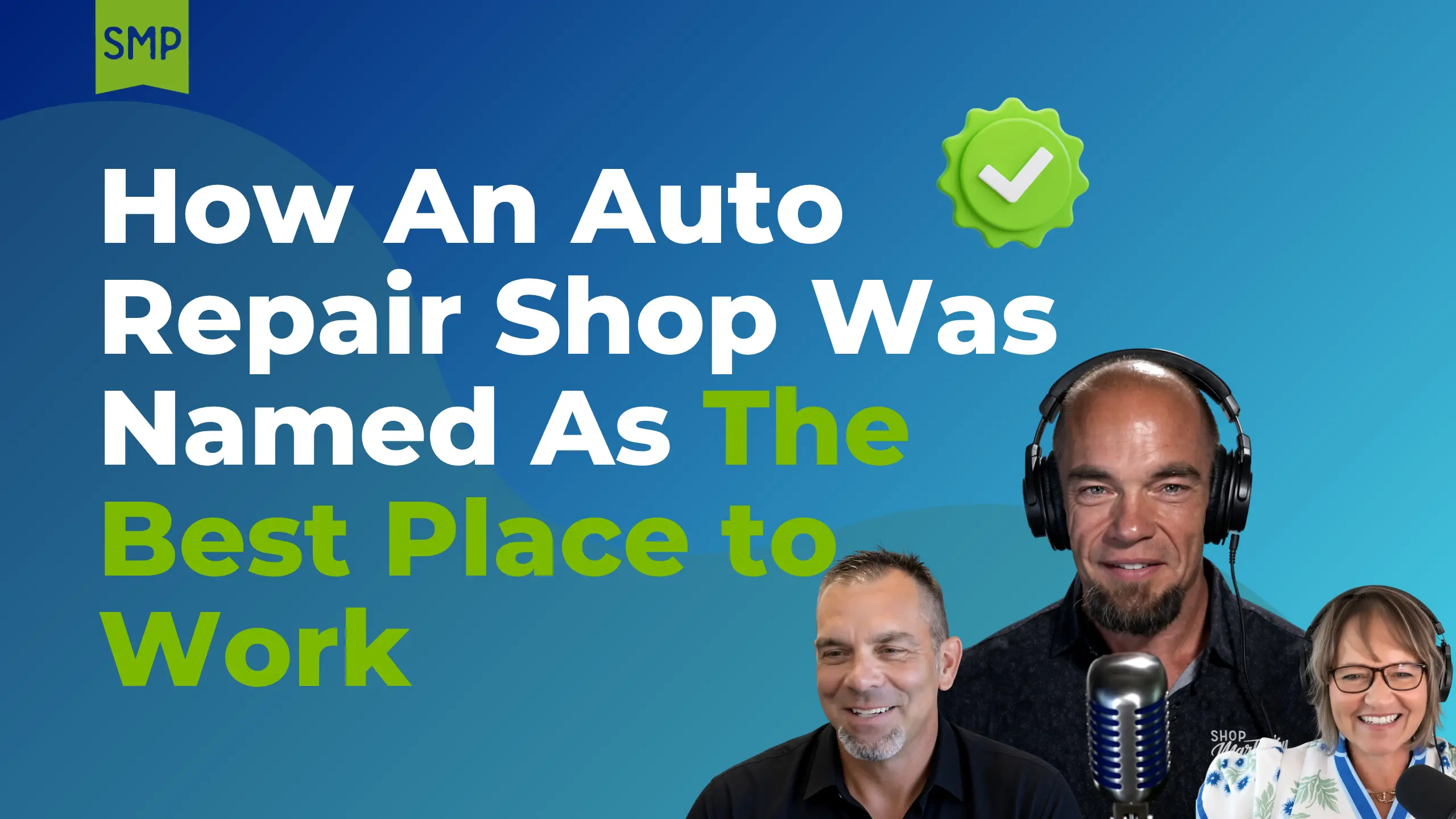
TL;DR: Matt Mevert of Mevert Automotive and Tire Center won VISION’s Best Place To Work Award, and his own team nominated him without telling him. We talked about how that happened: core values that actually got used instead of just posted on a wall, hiring for character over technical skill, and being willing to let go of a high performer when he starts costing you the rest of the team. We also got into how you measure culture before anyone hands you an award for it. Spoiler: it comes down to whether your people trust you enough to tell you the truth.
My phone started buzzing before Matt Mevert even had time to process what had just happened. He was sitting at his table at VISION Hi-Tech Training & Expo, surrounded by his team, and somebody had just called his shop’s name for Best Place To Work. He didn’t know he’d been nominated. His team put it together behind his back, and they didn’t even tell him why he needed to be there.
I’m pretty sure my text was the first one that landed. When I asked him afterward if we’d nominated him for the award, he corrected me. We hadn’t. His team just wanted him to win it badly enough to nominate him themselves.
That’s the story I want to unpack, because there’s a version of this every shop owner wants. Not the trophy. The moment where your own people decide, on their own, that you’re worth showing up for.
An Award Means Something Different When Your Team Nominates You
There’s no award an industry can hand you that means more than one your own people put you up for. Matt said it himself. For a minute there, receiving it, he got emotional. Not because winning felt good, though it did. Because it told him something he couldn’t have measured any other way: his team wanted to be there badly enough to go through the trouble of nominating him.
Brian and I have gotten our own awards over the years back when we had our shop. The ones that stuck with us were never the ones the industry decided on its own. They were the ones where our people had a hand in it.
If you’re a shop owner reading this and wondering whether your culture is working, that’s the test. Not whether people say nice things about you at review time. Whether they’d go out of their way, unprompted, to tell someone else you’re worth working for.
Core Values Sitting In A Folder Isn’t Culture
I could’ve pressed play on my own story while Matt was telling his. Same coach, twenty-plus years ago, telling us we needed a mission, vision, and values. We did the thing. We wrote them, we printed them, we put them on the wall.
Then nothing. They just sat there looking good.
Matt’s version was almost identical. He wrote his core values, shortened them because they were too long, hung them up, and felt like the work was done. It wasn’t until he started talking about one value per team meeting, telling a real story tied to it, explaining what he’d meant when he wrote it, that the values stopped being decoration.
You’ll know it’s working the same way we did. One of Matt’s managers, talking about a struggling employee, said the problem was a violation of their “trust through transparency” value, straight out of the packet Matt had handed him. We’ve had our own version of that moment, a team member telling Brian that a decision didn’t line up with our value of integrity. When your people are the ones bringing your values back to you, that’s when you know they’ve taken root for real. Not when they’re laminated.
You Can Train Technical Skill. You Can’t Always Train Character.
When Matt hires, he’ll ask about diagnostics and efficiency and how well someone picks up a new system. He has to. But he told us flat out that character is what gets a hire past the honeymoon period. Technical skill gets someone in the door. Character is what keeps them a fit six months later.
That’s gotten harder, by the way, not easier. Candidates can prep for an interview with the internet’s help now and give you all the right answers. Matt’s response has been to ask questions that pull back the layers: what they do outside of work, how they’ve handled a bad boss in the past, whether they think they’ve still got more to learn or believe they’ve already arrived. One of his core values is built around exactly that idea. None of us have arrived. If a candidate thinks they have, that’s a red flag, not a strength.
We’ve noticed our own version of this shift doing interviews virtually. My assistant sits in on every one with me, and more than once we’ve caught a candidate typing our questions into ChatGPT mid-interview. One guy asked me to repeat a question so he’d have time to type it in. You can’t train around that kind of thing showing up. You just have to know what you’re looking for before you’re in the room.
When A High Performer Becomes The Problem
This is the part shop owners don’t like to talk about, but Matt didn’t dodge it. He had a technician who turned a lot of hours, produced at a high level, genuinely talented. He was also going through something personal, got stubborn about accepting help, and started leaving a trail of tension behind him. Eventually, Matt let him go.
People hear that story and assume it must have hurt production, but it didn’t. Once that tension left the shop, the rest of the team came back to life. Matt’s words were that a rising tide raises all ships, and once that one person stopped weighing everyone else down, the whole shop picked back up.
I’ve got the same story from our shop. A guy who looked, from the outside, like a tremendous team player. What we didn’t know was what he was doing when we weren’t in the room. When we finally parted ways, our team told us, more or less, what took you so long.
If you’re holding onto someone because their numbers are good and you’re scared to lose the output, ask yourself what it’s costing you everywhere else.
How You Measure A Culture Before Anyone Gives You An Award For It
I asked Matt how he knows if culture is improving or slipping, long before VISION hands out a trophy for it. He was honest in saying that he doesn’t have it fully figured out. Neither do we, if I’m being straight with you.
What he does have is that people trust him enough to tell him when something’s off the rails. That trust doesn’t happen automatically. It gets built by handling hard conversations gracefully instead of letting them turn into more conflict and by naming the elephant in the room instead of pretending it isn’t there.
Brian and I lean on a tool for this that our team checks into every week. They share a high for the week, a low for the week, and whatever else needs to come out. I was skeptical of it at first, honestly, until I built my own version of it and started using it myself. That’s when I started seeing what it was worth. Our team has told us it feels like a journal, a place to empty out the good, the bad, and the ugly before the weekend instead of carrying it with them. Once people trust that what they write won’t be judged, just responded to, they tell you the truth. That’s your real culture measurement.
Recognition Doesn’t Have To Be Complicated
Matt’s shop does a birthday dessert tradition, usually a Dairy Queen ice cream cake, and shoutouts built into morning meetings when someone lives out a core value. At his Steeleville location, they’ve taken it further with a sticker board tied to their values. Fill your slots, spin a prize wheel, win a gift card or a meal out. He’ll be the first to say it sounds a little cheesy, but that it also works.
Twice a year, both of his shops get together outside of work entirely and spend a lake day in the summer and a Christmas gathering with a table full of gifts everyone picks from. Just time together as people, not employees.
None of this is complicated or expensive. It’s just consistency tied back to the same values everyone’s already talking about at work.
Frequently Asked Questions
How do I know if my shop's core values are working, or just hanging on a wall?
What should I be looking for in an interview beyond technical skill?
What do I do when my best technician is also becoming a culture problem?
How do you measure culture before you win an award for it?
How do you keep recognition consistent across more than one shop location?
Build The Kind Of Shop Your Own Team Would Nominate You For
The bottom line is that Matt didn’t win Best Place To Work because he had the best marketing or the flashiest shop. He won it because his team, on their own, decided he was worth putting up for it. That doesn’t happen by accident, and it doesn’t happen overnight. It happens because core values got talked about instead of framed, because hiring decisions weighed character as heavily as skill. After all, we let go of a high performer when he started costing more than he produced, and people trusted leadership enough to tell the truth before things went sideways.
None of that is a marketing tactic. It’s the kind of work that, when done right, becomes something worth building your marketing around instead of hiding behind. That’s the conversation we have with shop owners every day at Shop Marketing Pros, because real auto repair shop marketing only works when there’s a business and a culture behind it worth talking about. If you’re doing the work Matt’s doing, and you want help telling that story to the customers who’d love to hear it, that’s exactly where we come in.
