

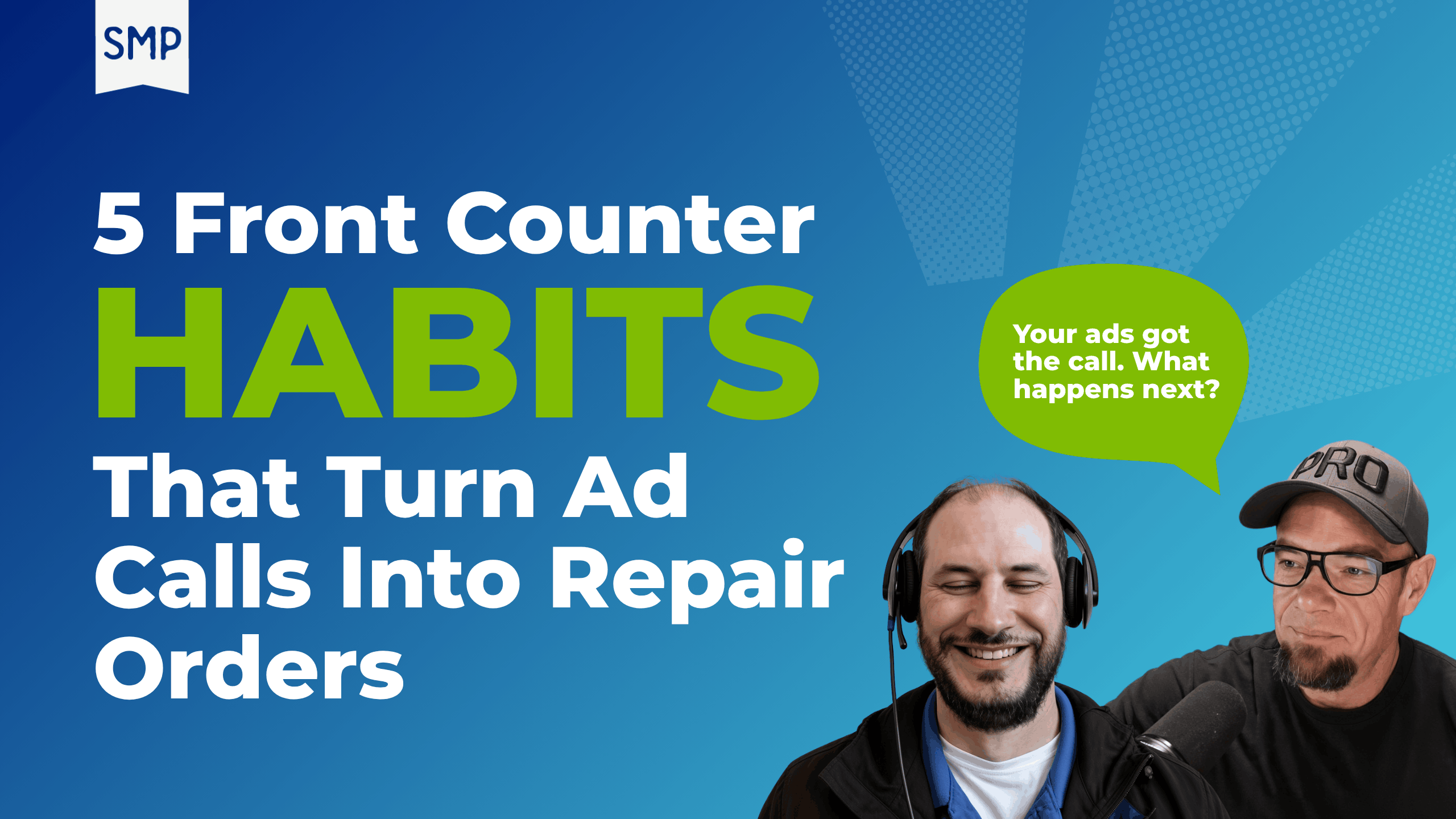
TL;DR: Running great Google Ads or Local Service Ads only gets you half the job done. The front counter decides whether that ad spend turns into a booked repair order or a wasted click, especially with LSA, where a lot of first-time callers don’t know your shop yet. Answer every call, get the caller past the price question, tell them why your shop is different, solve their real problem before they ask, and lock in a real appointment you can trace back to actual dollars. Get those five right, and your marketing will finally pay you back.
You run ads to fill bays. A lot of that ad spend gets lost somewhere between the click and the keys landing in a tech’s hand, and the ad usually isn’t what went wrong.
If you’re running Google Local Services Ads, what we call LSA, you already know it works differently than a standard Google Ads campaign. Instead of bidding on keywords, you’re bidding on a category, in this case, auto repair. Google LSA for auto repair shops now has more specific categories than it used to. Google expanded the old auto repair category into options like Brake Shop, Transmission Shop, Tire Shop, Oil Change Service, and Car Battery Store, so you can narrow things down more than you could before.
LSA still throws a wide net over anyone searching the category. You get callers who know exactly what they want next to callers who have no idea what to ask for.
LSA still isn’t the right play for every shop. European and diesel shops don’t have a category of their own yet, so they usually don’t do as well with it. Google has said it may add more categories in the coming months, which could change that. For general repair shops and shops built around brakes, transmissions, tires, oil changes, or batteries, LSA can be one of the better investments you make, as long as your front counter is ready for what it sends you.
Five things decide whether a lead becomes a booked job, and all five happen after the call connects. Get them right, and you convert Google LSA leads into customers and turn auto repair leads into booked appointments instead of watching them hang up.
1: Answer the Phone, Every Single Time
This is the most basic thing on this list, and it’s still where shops lose the most money. If the phone rings and nobody picks up, the ad already failed. It doesn’t matter how sharp your landing page is or how well your keywords are built. A ringing phone that goes unanswered is a dollar spent for nothing, and auto repair shop missed calls add up faster than almost any shop ever tracks.
With LSA specifically, it’s worse than wasted money. You’re paying for leads, and a call nobody answers is a lead that never got a chance to become a job. Missed calls can also hurt how your listing performs, and that’s exactly how missed calls affect auto repair advertising results you already paid for.
Michael Doherty, who spent 22 years on the front counter before becoming the marketing service advisor at Shop Marketing Pros, called about 40 shops after a recent industry event. Roughly half of them answered the phone at all. Of those, only around five sounded like a shop he’d actually want to hand his business to. Compare that against your own ad spend and decide honestly which side of that line your shop falls on.
Treat every call like your shop is being interviewed, because it is. The caller already did their job by choosing your shop instead of the next one on the page. The first ten seconds decide how the rest of that interview goes, which is the whole idea behind service advisor phone training.
A flat, rushed “yeah, this is Mike’s” doesn’t cut it. Something like “Thanks for calling XYZ Automotive. We pride ourselves on fixing it right the first time. This is Mike- who am I speaking with?” tells the caller in one breath that you’re confident, that you’ll take care of the problem, and that you’re glad they called.
Energy matters as much as the words. Hire advisors who bring real energy to the counter, have them smile before they pick up, or place a mirror next to the phone. It sounds silly, but it works. It’s hard to sound bored while you’re smiling at yourself.
2: Get the Caller Past the Price Question
A caller who opens with “how much do you charge” usually isn’t fluent in automotive. They know something’s wrong with their car, and they know enough to ask what it costs. Price is the only question they’ve got, and that’s the biggest reality behind “auto repair price shoppers.”
My theory: the caller who clicks the very top result on a search page, the one with the stars next to it, is often someone who hasn’t had time to dig deeper or doesn’t know what to look for in a repair shop yet. Your counter’s job is to teach them what matters, fast, before price becomes the whole conversation.
I’d argue there’s no such thing as a price shopper, just a shop that hasn’t shown them yet why price isn’t the point. The move is simple. When someone asks about cost, don’t lead with a number. Ask a question back.
“What’s going on with the vehicle?” “When did you first notice it?” “Tell me more.” That last one comes from Marcus Sheridan, and it works because it opens a conversation instead of closing one with a quote the caller has no context for. Zig Ziglar said it best: stop selling and start helping. The moment a caller feels like you’re trying to understand their problem instead of closing a sale, their guard comes down, and that’s where auto repair lead conversion actually starts.
3: Tell Them Why You're Different, Right Then
Ask a shop owner what sets their shop apart from the one two miles down the road, and they’ll give you a list without blinking. Ask if their advisors say any of that out loud on the phone, and the answer is usually no. You already know your differentiators. The caller doesn’t, and they won’t find out unless somebody tells them in that first conversation. That’s how to differentiate your auto repair shop from competitors: say it out loud during the call.
Kim and I learned this firsthand recently when we had a pool put in at our house. We talked to three companies, and all three landed in roughly the same price range, but we went with the most expensive one, which was about $20,000 more than the next bid.
When they sat down with us, they laid out exactly what set them apart: the timeline they’d hit, how they’d communicate along the way, and what they’d stand behind if something went wrong. By the time they left, we were already raving fans.
That’s your service advisor’s job on every call. If you specialize in brake work, say so. “We specialize in brake service” does more for a caller than any amount of generic reassurance, because it tells them they’ve found a specialist instead of a generalist guessing at their problem. Say the thing that makes your shop worth choosing out loud, every time, because the caller isn’t reading your Google reviews while they’re still on the phone with you.
4: Solve the Logistics Before They Have to Ask
A customer calling about a check engine light is also worried about how they’re getting to work, picking up their kids, or making it through the day without a car. If you only handle the mechanical half of that call, you’ve left the harder half for them to figure out alone. That’s a great way to improve your auto repair shop customer service at no cost.
If someone calls in stranded on the side of the road, the first question should be, “Are you safe?” At Peak Automotive, when a call like that came in, we’d send Nate, our porter at the time, out to get the customer while a tow truck handled the vehicle.
One of the best lines we ever had on our website was the hero text: “We take care of people” and underneath it, smaller: “who drive European cars.” That’s the order it should always go in. The person first, the car second.
The same thinking applies to your auto repair shop scheduling. Run a morning huddle so your advisors actually know what the day looks like, including the no-shows, the late parts, and the small jobs that can fit into the cracks.
When a caller needs help now, you can only say yes if you’ve already built room to say yes. Shops that stay booked solid two or three weeks out will lose a real share of their LSA calls to the shop down the street that found five minutes in the schedule.
5: Book a Real Appointment, Then Track What It's Worth
“Bring it by whenever” is not an appointment. It’s a suggestion, and both sides treat it that way. Nobody shows up on time for a suggestion, and nobody holds a bay open for one either.
Give the caller an actual time. “Can you have it here by 8:45 tomorrow morning?” turns a maybe into a commitment on both ends, and that single habit is how service advisors can increase appointment bookings without changing anything about the ad itself.
Once the time is locked in, confirm it the way the customer actually wants to hear from you, whether that’s text, call, or email, and send a reminder before the day arrives. It’s a small step that keeps no-shows from quietly eating the ad spend you already paid for.
Then, measure what the call was actually worth. Plenty of shops judge ad performance by counting leads or phone calls, and that number tells you almost nothing about whether the ad made or lost you money. Counting leads and calling it ROI is not accurate.
With LSA, you’ve got a phone number attached to every call in your dashboard. Match that number to the repair order it produced, even if it’s just a line in a spreadsheet you update weekly, and you’ve built your own version of auto repair shop call tracking.
That’s where auto repair advertising ROI actually gets measured instead of guessed at. We built a tool called Pro-ROI here at Shop Marketing Pros to report that match-up for shops on our integrated shop management systems. PRO-ROI shows you the dollars that matter, like the repair orders, first visits, lifetime value, and ARO.
The ad is only half your investment. The other half happens at your counter, and it costs you nothing extra in ad spend to get it right. You already have the advisors. Get these five things in place, and the ad spend you’re already putting out finally has a real shot at paying you back.
Frequently Asked Questions About Turning Ad Calls Into Customers
Why do my Google LSA calls feel like lower quality leads compared to my other marketing?
LSA pulls in anyone searching the category of auto repair that you’re marketing for, not just people looking for your shop by name or always for a specific service. Those results show up earlier in their search results, so the lead usually has less information than other leads, leaving your counter with more work to do to earn the business. The shops that do it well turn plenty of them into regulars.
How fast do I actually need to answer the phone for my ads to work?
Before it goes to voicemail, every time. I’d train advisors to grab it within a few rings, because an unanswered LSA call is a lead you paid for and never got to work. Outside of LSA, a missed call is still a missed opportunity and wasted ad spend if it was paid for.
What should a service advisor say in the first ten seconds of a call?
Name your shop, sound confident, and get the caller’s name. Try “Thanks for calling XYZ Automotive; we pride ourselves on fixing it right the first time. This is Mike. Who am I speaking with?” Say it like you’re glad the phone rang, because tone carries as much as the words.
How do I get callers to stop leading with price?
Ask a question back instead of quoting a number. “What’s going on with the vehicle?” or “tell me more” opens the conversation. Callers lead with price because it’s the only question they know to ask. Give them a better one and the whole call changes.
How do I know if my ad spend is actually making me money?
Stop counting leads and start counting repair orders. Match the phone numbers in your LSA dashboard to the repair orders they produced, weekly if you can, and weigh that revenue against what you spent on ads and management. That number tells you the truth. Call count never will.
Want Help Making Sure Every Call Pays Off?
Running ads without a counter that’s ready for them is like sending a tow truck out without the address. You’ll get moving, but you won’t get there efficiently, and it’ll cost more than it should have.
The best auto repair shop marketing starts with ads that get managed well and pays off when your counter is ready for the calls they bring in. The five habits above are yours to put in place, and they cost nothing extra.
At Shop Marketing Pros, we run your Google Ads and Local Service Ads and track the results back to repair orders with PRO-ROI where your shop management system supports it. Book a free discovery call with us, and we’ll determine whether or not we’re a good fit to work together.
Now go fill those bays.
