


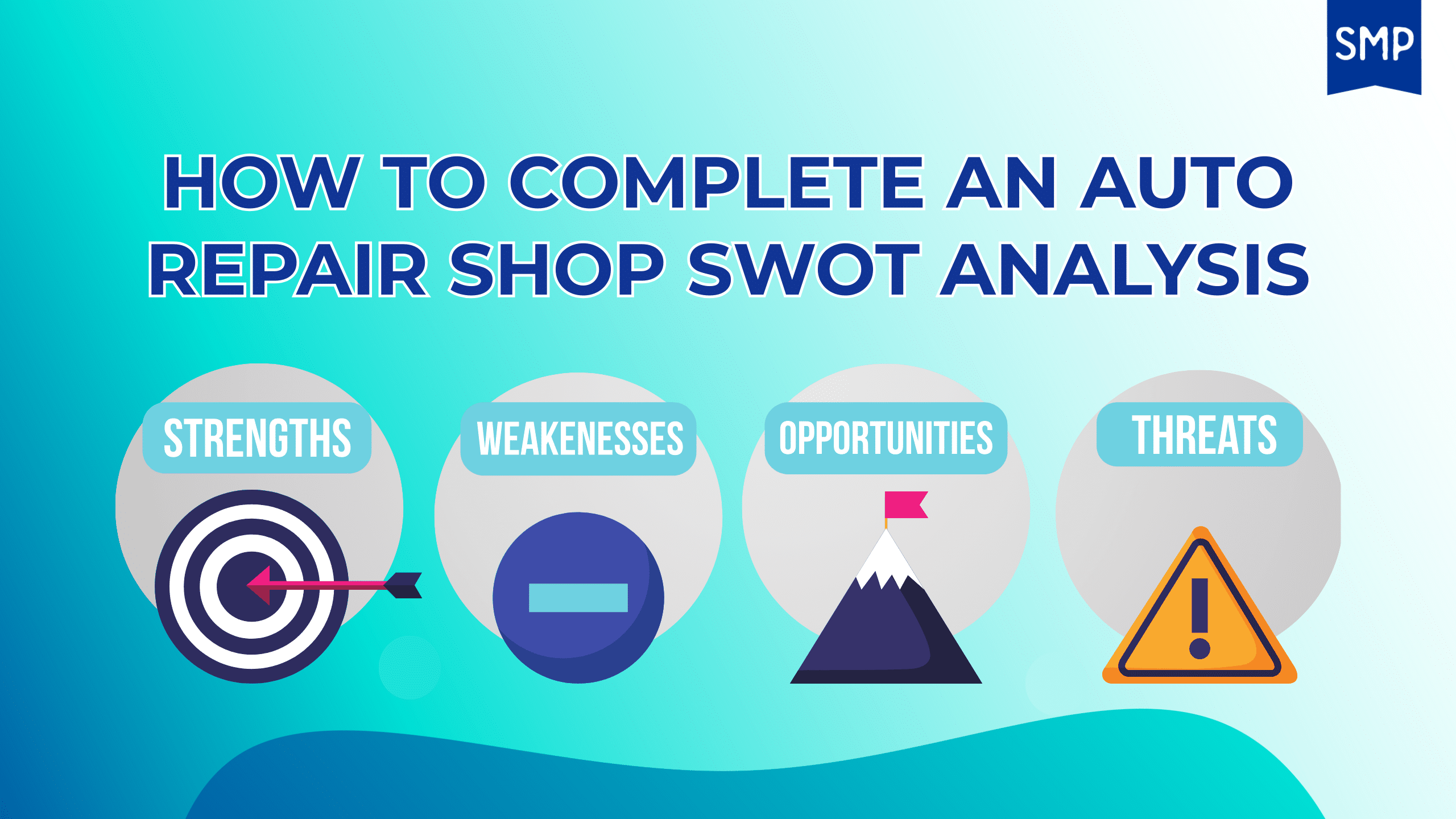
TL;DR: Quick SWOT Breakdown for Busy Shop Owners
- Strengths: Double down on what sets your shop apart: skills, relationships, location, and reputation. If you don’t promote your strengths, they’re just wasted potential.
- Weaknesses: Not every weakness needs fixing, but some (like not knowing your numbers) will wreck your shop. Be honest and either improve it, hire around it, or stay away from it.
- Opportunities: This is where you get ahead. Whether it’s Local Service Ads or spotting a market gap, go where others aren’t paying attention. Fast wins or long-term plays, know what’s out there.
- Threats: You can’t dodge what you can’t see. Know what could shut you down: new competitors, market shifts, or even your lease terms. Get ahead of it before it’s a problem.
Let’s cut through the noise. You’re not doing a SWOT analysis because it sounds like some MBA fluff. But if you want to grow a shop that runs like a machine, earns trust in your community, and outlasts the competition, this isn’t optional. It’s strategic warfare. And most of your competitors aren’t even thinking about it.
This isn’t theory. This is how you figure out what’s working, what’s broken, where the gold is buried, and where the landmines are hiding.
Think of it like diagnosing your shop. You wouldn’t just start replacing parts without scanning the codes and testing systems, right? Same goes for your business; you need the data before you make the move.
If you care about auto repair shop marketing, scaling your brand, or just not wasting your time on things that don’t move the needle, keep reading.
What Is a SWOT Analysis for Auto Repair Shops?
A SWOT analysis helps you get brutally honest about four areas of your business:
- Strengths – Why do people choose you? And if they don’t, what haven’t you told them yet?
- Weaknesses – What’s holding you back, or could blow up if ignored?
- Opportunities – Where are the easy wins? The future profits? The stuff your competitors are asleep on?
- Threats – What’s creeping up that could wreck your business while you’re busy “staying busy”?
Think of it like a full vehicle inspection only for your business. You’re not just checking fluids, you’re looking at the whole system: what’s performing, what’s failing, what’s ready to upgrade, and what might leave you stranded.
Why Every Shop Owner Should Be Doing This
Most shop owners started as technicians, so making business decisions becomes based on what feels urgent, not what’s important.
You’re jumping from fire to fire: chasing the next hire, rushing through parts orders, guessing at what marketing might work this month. That kind of thinking keeps you busy, but it doesn’t make you better.
A SWOT analysis forces you to slow down and lead, rather than react. It helps you see the 30,000-foot view of your business. When you operate from that level of clarity, you stop wasting time, money, and momentum.
Whether you’re handling your campaigns or working with one of the best auto repair shop marketing companies, a SWOT analysis gives your strategy real teeth. You’re not hoping it works. You’re building something that’s designed to.
The Real-World Breakdown of SWOT for Auto Repair
Let’s walk through how this applies to your shop.
We’re breaking down each part of the SWOT in real-world terms, so you can use it, not just understand it. If you want to go even deeper into building a real-world marketing plan, check out this podcast episode where we lay it all out step-by-step.
Let’s get into it.
Strengths: Why People Choose You (Or Should)
This is where most owners mess up. You assume your strengths are obvious. They’re not.
Maybe you’re incredible at engine replacements. That’s rare. That’s money. But you’re chasing diag work because it “feels” more advanced. Stop that. Own what you’re great at and do more of it.
Trying to be everything to everyone is like throwing parts at a car without checking the codes first. Focus beats flash every time.
Strength isn’t just what happens in the bays. It could be your location, a killer parts hookup, or a service advisor that builds trust in 60 seconds. It might even be your company culture that makes techs happy who stick around and deliver consistent quality.
When you know your strengths and communicate them clearly, everything from your service experience to your marketing sharpens. Your auto repair shop marketing shouldn’t be generic. It should scream what makes you the obvious choice.
Bottom line: If you don’t know why people choose you, your marketing won’t reflect it, and your ideal customers won’t know why to choose you, either.
Weaknesses: Know What to Improve, Avoid, or Hire For
Some weaknesses are just reality. If you’re not great at advanced electrical diagnosis, but don’t see them in your shop often, you’re good. But if you don’t understand your profit and loss numbers? That’s a business-killer. You don’t have to be the CFO of your shop, but you do need to understand profit, ARO, and margins. Otherwise, you’re just guessing.
Trying to scale a shop without understanding your numbers is like tuning an engine with no scan tool; you’re just throwing RPMs and hoping for the best.
You’ve got three paths when it comes to weaknesses:
- Fix them with training or systems.
- Hire around them and delegate.
- Stay the heck away from them in your service offering.
Too many shop owners try to “market their way out” of a bad operation. That’s where even the best auto repair shop marketing companies can’t save you. Marketing will amplify what you are already good at or bad at.
Own your weaknesses before they own your shop.
Opportunities: Where the Wins Are Hiding
This is the fun stuff, but only if you’re paying attention.
Opportunities don’t always show up with a big neon sign. Sometimes they’re hidden in what your competition is ignoring. Local Service Ads, for example, are still underused in many markets. You could be booking premium work tomorrow with the right setup, while everyone else is fumbling with boosted Facebook posts.
Think bigger, too. Is there a niche in your area no one owns yet? Diesels, hybrids, fleet accounts, Euro, vintage? Find the underserved corner and stake your claim.
It’s just like spotting a pattern in a drivability issue; once you know what to look for, it jumps out at you. But most people miss it because they’re too busy chasing low-paying oil changes.
Even outside your walls, are big employers coming into town? What kind of vehicles are their employees driving? What’s going to shift in your local traffic flow or infrastructure? Get curious and stay a few steps ahead.
Opportunity shows up. But only the prepared can capitalize.
Threats: What Could Blindside You
This one hits home for a reason.
Most shop owners ignore this category until it’s too late. I lost my first shop because of road construction I didn’t see coming. My landlord knew. Never said a word. I found out when I literally couldn’t access my building one morning.
Threats aren’t always dramatic. They’re often subtle:
- A quiet competitor adding another lift every quarter.
- Your best tech hinting at “burnout.”
- Google shifting how customers find you online.
Ignoring a threat is like ignoring a flashing check engine light. You can pretend it’s fine, but when the failure hits, it’s always worse and more expensive.
The truth is, you don’t rise to the level of your ambition; you fall to the level of your preparedness. A SWOT analysis won’t stop threats. But it will help you plan, pivot, and act before they cost you your shop.
This is about playing offense and defense at the same time.
How to Build Your Shop’s SWOT Strategy
Don’t overthink it. Just sit down with your team and walk through each of these. Be honest. Be strategic. Write it down, talk it out, and use it as your roadmap.
- Strengths
- What gives us a real edge over other shops?
- What do customers consistently rave about?
- Weaknesses
- Where are we losing time, money, or trust?
- What do we avoid because we’re not good at it?
- Opportunities
- Where can we grow that others haven’t noticed yet?
- What trends or partnerships could move us forward fast?
- Threats
- What could disrupt us if we’re not prepared
- Where are we too dependent on people, tools, or vendors?
Don’t let your shop run on autopilot. Get strategic on paper.
Frequently Asked Questions for SWOT Analysis (FAQ)
What’s the purpose of a SWOT analysis for auto repair shops?
A SWOT analysis helps you get a full picture view of your business, what you do well, what’s holding you back, where you can grow, and what could hurt you. It’s the foundation of smarter decision-making in operations and marketing.
How often should an auto repair shop update its SWOT?
At a minimum, review your SWOT once a year. But anytime there’s a major shift, new competition, staff changes, service expansions, or market trends, it’s smart to update it. Think of it like a vehicle inspection: you don’t wait until something breaks to take a look.
Can a SWOT analysis improve my marketing ROI?
Absolutely. When you know your shop’s real strengths and growth areas, your marketing becomes way more targeted. No more guessing. You’ll attract better clients, convert more leads, and stop wasting money on campaigns that don’t align with who you are.
Ready to Turn Your SWOT Into a Real Strategy?
SWOT might sound like a corporate term, but trust me, it’s the down-and-dirty clarity tool every shop owner needs. It’s not about theory. It’s about knowing exactly what to lean into, what to leave behind, and how to grow with purpose.
But clarity is only half the battle. Once you know where you want to go, you need a way to get there.
That’s where our Digital Marketing Inspection (DMI) comes in.
If your SWOT helped you figure out what matters most, the DMI will show you how your current marketing stacks up and exactly where the gaps are.
Book a free discovery call with our team at Shop Marketing Pros. We’ll audit your online presence, review your strategy, and help you align your marketing with your biggest opportunities.
Let’s take what you know and build something that brings the right cars through your bay.
