



TL;DR:
By the end of this, you’ll know the difference between acquisition and retention marketing and why the best shops use both. Acquisition brings in new customers but costs more and starts from zero trust. Retention is cheaper, builds loyalty, and turns one job into many through repeat visits and referrals. Use acquisition to fill the funnel and retention to maximize every customer’s value. Do both, and you’ll keep your bays full and your shop thriving.
Most shop owners think “marketing” means finding new customers. You’ve probably heard it, maybe even said it yourself: “We need to get our name out there.”
And yes, there is truth to that. But if you don’t know WHO you’re marketing to, WHY you’re doing it, and WHAT outcome you expect, you’re just throwing money into the wind and hoping it lands in the right parking lot.
The truth? Real, sustainable shop growth doesn’t come from just chasing new customers. It comes from balancing two very different strategies:
- Acquisition marketing – bringing new customers in.
- Retention marketing – bringing existing customers back.
Most shops overdo the first one and completely underinvest in the second. That is a problem because retention is often the cheaper, faster, and more effective play.
Today, we’re going to break this down, not just so you understand the difference, but so you can start applying both in a way that actually fills your bays, improves your margins, and creates a customer base that sticks around for years.
Marketing Without a Map is Like Test-Driving Without Gas
If you wouldn’t hop in a customer’s car for a test drive with an empty tank, you shouldn’t launch a marketing campaign without knowing where you’re headed.
Before you spend a single marketing dollar, you have to answer three questions:
WHO you’re marketing to
- Acquisition = People who have never been to your shop. These are cold prospects who don’t know you yet.
- Retention = People who already know, like, and trust you. These are the folks you’ve already impressed and can win over again.
WHY you’re marketing to them
- Acquisition = To create awareness, build your name in the community, and grow your customer base.
- Retention = To build loyalty, get customers back in more often, and encourage referrals.
WHAT you expect to happen
- Acquisition = Booked appointments from new customers.
- Retention = Repeat visits, higher average repair orders, and word-of-mouth leads.
Skip this step, and you’re like a tech starting a big repair without confirming the diagnosis. Sure, you might get lucky and hit the problem, but most of the time, you’ll waste time, parts, and energy, and in marketing, that means wasting money too.
From “Never Heard of You” to “You’re the Only Shop I Trust”
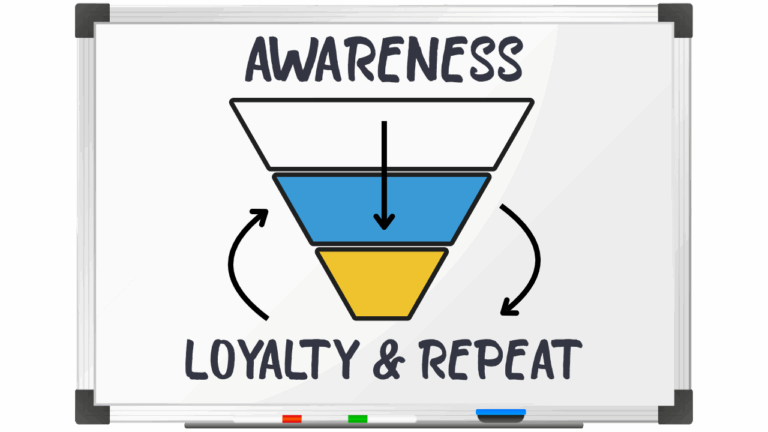
Your marketing should take customers on a journey, not just try to snag them for a one-and-done job.
Here’s how that journey looks:
- Stage 1: Awareness – They finally know you exist. Maybe they saw your Google ad, passed your shop, or heard about you from a friend. This is where acquisition marketing does the heavy lifting.
- Stage 2: Loyalty – They’ve given you a shot, had a great experience, and now they trust you with their car. This is where retention marketing kicks in and starts working for you.
- Stage 3: Repeat – They keep coming back for oil changes, diagnostics, repairs, and even the big-ticket jobs because they believe in your shop and your team.
The problem? Most shops pour everything into Stage 1 and barely touch Stages 2 and 3. That’s like doing a brake job but never torquing the wheels before you hand over the keys. You’ve done some of the work, but you’ve skipped the part that keeps the vehicle and your customer relationship solid.
When you nail retention, the results compound. That customer you spent money to acquire last year might spend thousands more over the next five years and bring friends, family, and coworkers with them. That’s how you build a customer base that not only sticks around but actively grows your business for you.
Acquisition Marketing: How New Customers Find You
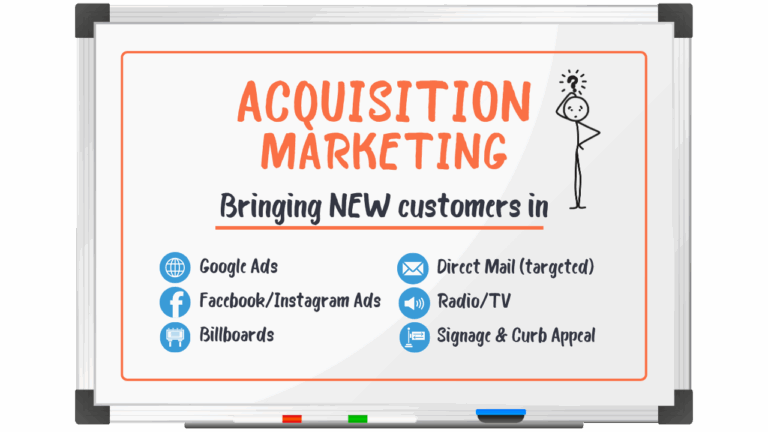
Acquisition marketing is about bringing new people into your shop for the first time. It’s the marketing equivalent of saying, “Hey, we’re here, we fix cars, and we’d like to help you.”
Examples of acquisition tactics:
- Google Ads
- Facebook and Instagram ads
- Billboards
- Cold direct mail
- Radio and TV
- Curb appeal and signage
The upside: Acquisition is essential for new shops, for shops that have a lot of customer turnover, and for any shop looking to scale quickly. You cannot grow from $2M to $5M without some form of acquisition strategy.
The downside: Acquisition is expensive. You’re paying to get in front of people who have no reason to trust you yet.
Think of acquisition marketing like investing in new diagnostic equipment. It costs you up front, it takes time to see the payoff, but without it, you’re limited in how much work you can bring in.
Retention Marketing: The Easiest Money You’ll Make
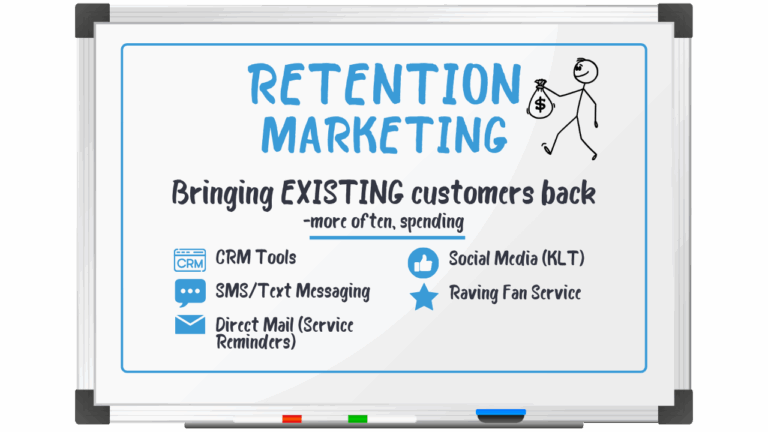
Retention marketing is about keeping the customers you already have and encouraging them to come back more often and spend more when they do.
Examples of retention tactics:
- CRM service reminders
- SMS and text marketing
- Direct mail for service reminders and thank-you notes
- Authentic social media content that builds know, like, and trust
- “Raving fan” customer service that people can’t stop talking about
The upside: Retention marketing is significantly less expensive because you’re targeting people who already know you.
The hidden bonus: When you create raving fans, they do your acquisition for you.
Skipping retention marketing is like doing a major repair but never recommending the maintenance that will keep it from breaking again. You’ve done the job once, but you’re missing the opportunity to keep that car and customer coming back.
Acquisition vs. Retention: Which is Better?
You don’t have to pick a side in the acquisition vs. retention debate. The truth is, both matter, but at different times and for different reasons. Here’s a quick breakdown to see where each one fits in your shop’s growth plan.
| When to Focus on Acquisition | When to Focus on Retention |
|---|---|
| You’re a brand-new shop with no customer base yet. | You’ve been in business a while and already have a solid customer list. |
| You need to fill the funnel with first-time customers. | You want to increase visit frequency and average repair orders. |
| You’re aiming for fast growth or expanding into a new market. | You want to build loyalty and get more referrals from happy customers. |
| You’ve had high attrition from customers moving or selling their cars. | You want to multiply the value of the customers you already have. |
Breaking Down the Dollars and Cents of Your Marketing
Numbers don’t lie, so let’s see what acquisition and retention look like in the real world.
Acquisition Example
You spend $500 on Google Ads and bring in 10 brand-new customers. That’s $50 for each new face in your shop. Not bad, but remember, you’re starting from scratch with each one. They don’t know you yet, so you’ll need to work harder to build trust and turn them into regulars.
Retention Example
You spend just $50 on a CRM campaign, sending service reminders and follow-ups to people who have already been in your shop. That brings 25 of them back for work. If your average repair order is $400, that’s $10,000 in revenue from a $50 investment.
See the difference? Acquisition fills your database with new names. Retention turns that database into your most profitable tool.
It’s like spotting needed suspension work while doing a brake job. The brake job might have brought them in, but the thorough inspection and follow-up turned it into a $1,000 ticket. Same customer, more value because you paid attention and kept the conversation going.
How to Put This Into Action in Your Shop
You know the difference between acquisition and retention marketing. Now it’s time to put that knowledge to work. Here’s a simple action plan to get both running smoothly in your shop.
- Measure your current split – Determine how much time and money you’re putting into acquisition versus retention.
- Track ROI for each – Compare the dollars spent on each type of marketing to the revenue they generate.
- Double down on retention wins – Use your CRM for reminders, train service advisors on follow-up, and create consistent systems.
- Keep feeding acquisition – Run targeted ads, stay active in your community, and keep your shop visible.
- Build a 12-month plan – Plan marketing efforts year-round so both acquisition and retention are always running.
Why Loyal Customers are the Most Valuable Tool in Your Shop
With acquisition, you pay for every new customer you bring in. With retention, you invest once to earn their trust and then keep benefiting from that relationship for years.
Loyal customers have a higher value to your shop. They spend more per visit, they return more often, and they send friends and family your way without you having to spend another dime to find them.
It works the same way as maintaining a well-cared-for vehicle. Keep up with it, and it will keep performing for you, costing less over time while delivering more value.
Don’t Just Get Seen - Get Chosen and Remembered
Too many shops spend their budget chasing new customers while neglecting the ones they’ve already earned. That creates a constant cycle of replacing customers instead of building a loyal, profitable base.
Acquisition marketing gets you noticed.
Retention marketing makes you remembered.
When both work together, you fill your bays, improve margins, and position your shop as the go-to choice in town. Acquisition brings in fresh opportunities. Retention turns each customer into long-term value.
At Shop Marketing Pros, we create marketing plans that do both attract the right new customers while keeping your best ones coming back. It’s not about staying busy for a week; it’s about growth you can count on.
Book your free discovery call and let’s make sure your marketing is working as hard as you are.
And remember… in everything you do, Be a Pro.
